


 English
 中文简体
中文简体
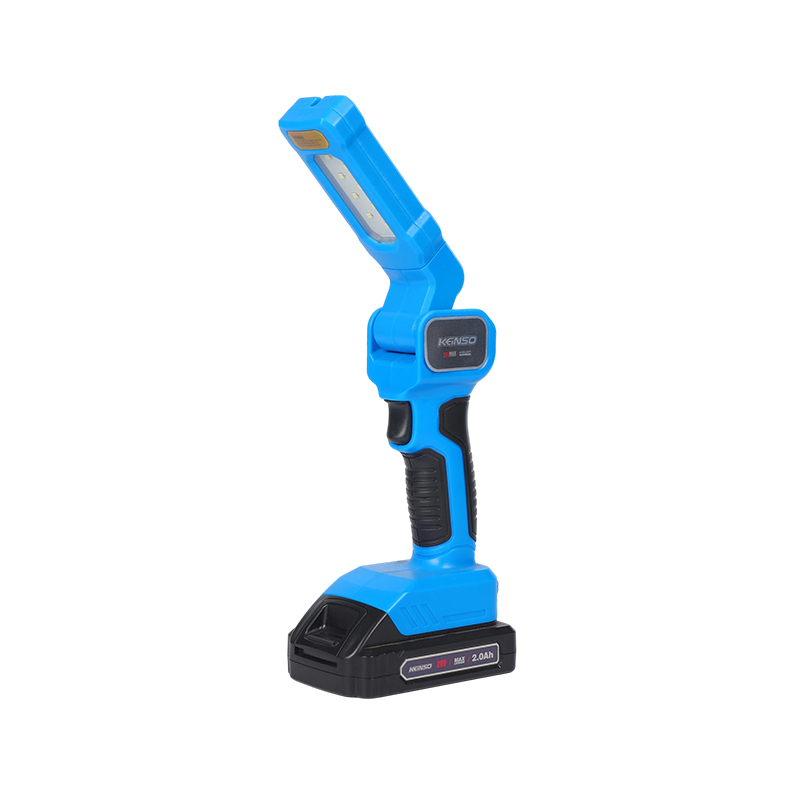
A flashlight rolls off the fender. A drop light cord snags in the creeper wheels. A mechanic needs both hands on the wrench, not one hand holding a light. A cordless lithium battery car repair worklight solves this by staying put. It magnets to a hood, hangs from a bracket, or stands on a swivel base. The beam hits the valve cover, the brake caliper, or the wiring harness without the mechanic touching it. For professional technicians and home garage mechanics, the right light means the difference between seeing the bolt and guessing.
Magnets, Hooks, and the Swivel That Holds Position
The light has to stay aimed. A magnetic base grabs steel hoods, frame rails, and control arms. The magnet strength determines whether the light stays put when the mechanic's elbow bumps it reaching for a socket. Rare-earth magnets in a rubber-coated housing hold firm and do not scratch the paint.
A rotating hook offers a second mounting option. It hangs from a hood latch, a strut brace, or a piece of conduit. A swivel joint between the light head and the body aims the beam. A joint that stays tight after hundreds of adjustments keeps the light on the work. A joint that loosens lets the head droop, and a drooping light illuminates the floor, not the intake manifold.
Brightness, Beam Shape, and Battery Life
Lumens measure total output. Lux measures intensity at the work surface. A COB LED panel floods a wide area with even light for general work. A spotlight LED throws a focused beam deep into an engine bay or a wheel well. A cordless lithium battery car repair worklight that offers both modes covers more jobs.
Color temperature changes how details appear. Cool white near 6000K shows contrast on metal and catches cracks and leaks. Warm white near 4000K eases eye strain during long diagnostic sessions. Adjustable brightness extends runtime. Full power lights up a bay. Low power handles close work where too much light glares off chrome and polished surfaces.
The battery is the runtime clock. 18650 or 21700 lithium cells deliver two to six hours depending on brightness. USB-C charging lets the mechanic top up from the same cable that charges a phone. A fuel gauge, whether a simple LED or a digital readout, prevents the light from dying mid-bolt. A replaceable battery extends the tool's life past the first cell degradation. A sealed battery turns the light into e-waste.
Here is what a worklight needs under the hood:
- Rare-earth magnets in a rubber housing that grip without scratching
- 360-degree rotating hook and a locking swivel joint
- COB flood and LED spot with adjustable brightness
- USB-C charging and a battery level indicator
- Weight balanced to hold position without drooping
Where Mechanics Actually Use It
Brake jobs put the light on the control arm or the strut tower. Timing belt work hangs the light from the hood latch. Under-dash wiring diagnostics lay the light on the floor mat pointing up at the fuse panel. A cordless lithium battery car repair worklight adapts to each position because the magnet, the hook, and the swivel work together.
Roadside repairs at night demand fast deployment. A light magneted to the underside of the hood illuminates the engine while the driver changes a belt or checks a coolant leak. No cord. No setup. Just light where it is needed.
The Cheap Light Tells on Itself Fast
The magnet is weak. A single small disc slides down the panel the first time a car door slams. Multiple strong magnets or a full-length magnetic strip fix this. The swivel joint loosens and the head flops down. A metal hinge or locking mechanism holds the set angle. The battery fades and cannot be replaced. The light becomes a disposable product after a year of use. A cordless lithium battery car repair worklight with a removable battery stays in service. Choose a light with strong magnets, a tight swivel, and a battery that can be swapped. The beam stays on the bolt. Both hands stay on the wrench. That is the whole reason the light exists.
 Previous

