


 English
 中文简体
中文简体
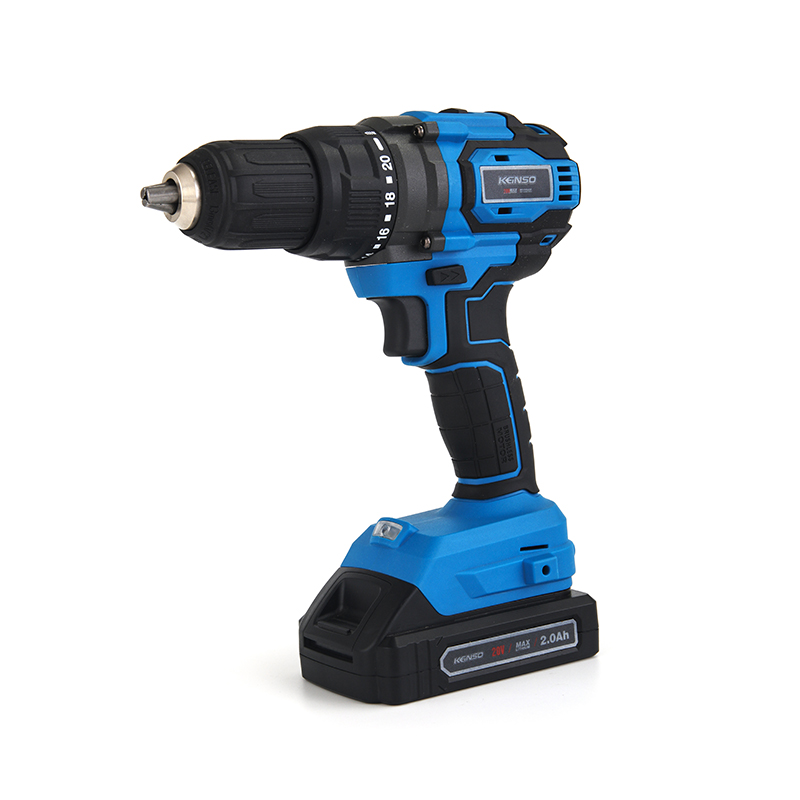
A lithium battery brushless dual speed drill promises two things: the efficiency of a brushless motor and the flexibility of high and low speed ranges. Contractors buy it for driving screws in high speed and drilling holes in low speed. The drill arrives with smooth power delivery and impressive runtime. Twelve months of daily use later, the same drill struggles to drive a 3-inch screw that it handled easily on day one. The battery shows full. The motor sounds normal. But the gearbox no longer transfers power cleanly, and the dual speed selector feels loose. The lithium battery brushless dual speed drill that cannot maintain its gear train precision becomes a single-speed drill with a broken promise, and the contractor reaches for the older brushed drill that still delivers dependable torque.
Gear Train Wear Eats Power Before the Motor Wears
The brushless motor lasts thousands of hours. The gear train does not. The drill's two-speed gearbox uses planetary gears that reduce motor speed and multiply torque. Each gear tooth contacts its mating tooth under load. Over time, the tooth surfaces wear, and the contact pattern shifts from smooth rolling to sliding. The sliding creates friction that absorbs energy meant for the chuck. A lithium battery brushless dual speed drill with worn gears delivers less torque at the same motor current, and the operator feels the loss as reduced driving power.
- Gear material and hardness determine whether the teeth hold their profile through thousands of engagement cycles
- Lubricant type and retention determine whether the gear faces run with low friction or grind against each other dry
- Bearing support for the gear shafts determines whether the gears maintain proper mesh alignment under heavy drilling loads
- Housing rigidity determines whether the gearbox flexes under torque, which changes tooth contact patterns and accelerates localized wear
A lithium battery brushless dual speed drill manufacturer that uses hardened gears, sealed lubrication, robust bearings, and stiff housings ships drills that hold torque for years. One that economizes on any of these ships drills that lose power gradually, and the operator blames the motor for what the gears caused.
Electronic Clutch Disengages Earlier as Components Age
The brushless motor relies on an electronic controller that measures current to detect overload and disengages the motor to prevent damage. The current sensing circuit uses precision resistors that drift with temperature and age. A lithium battery brushless dual speed drill that disengaged at 45 newton-meters when new may disengage at 35 newton-meters after a year. The operator feels the clutch kick in earlier than expected. The drill stops driving before the screw is fully seated. The operator resets and tries again, adding time to every fastener.
- The drill stops driving screws at the same battery level where it previously powered through
- The clutch engages more frequently in high gear than in low gear under identical loads
- A fully charged battery produces the same early disengagement as a partially drained one
- The drill performs normally when the user manually releases and re-applies the trigger during driving
A lithium battery brushless dual speed drill user who recognizes these signs understands that the electronic clutch has drifted. One who does not assumes the tool is worn out and replaces it unnecessarily.
Battery Output Sags Under High Torque Demand
Lithium battery cells age. The internal resistance rises. The voltage drop under load increases. A lithium battery brushless dual speed drill that runs the motor at full speed under no load may still sound healthy. Under load, when the controller demands high current, the voltage sags. The controller interprets the sag as a low battery condition and reduces motor power. The operator sees three bars on the battery meter and wonders why the drill cannot drive the screw. The meter shows voltage at rest. The load sees voltage under demand. The two numbers diverge as the battery ages. A fresh battery delivers 20 volts at 50 amps. A two-year-old battery delivers 18 volts at the same current. The 2-volt difference translates to a 10 percent torque reduction that the operator feels as decreased performance.
Chuck Jaw Wear Drops Grip Before Torque Drops
The chuck holds the bit. The jaws clamp against the bit shank. Each clamping cycle wears the jaw faces. A lithium battery brushless dual speed drill that held a 1/4-inch hex bit securely when new may drop the same bit after a year of use. The jaws still close. The chuck still turns. But the grip force has decreased, and the bit slips under load. The operator tightens harder. The jaws wear faster. The cycle accelerates. The chuck is replaceable. Most operators do not replace it. They assume the drill has lost power and buy a new one. The lithium battery brushless dual speed drill that lost its chuck grip was still capable of full torque—the bit just could not stay in the tool long enough to receive it. The chuck failed, not the motor, not the gears, not the battery. But the whole drill gets replaced because the chuck gets ignored.
 Previous

